Showing posts with label arabic present tense. Show all posts

Tuesday, 6 October 2015

Arabic - Do's and Don'ts - Imperative verbs


بِسمِ اللهِ الرَّحمانِ الرَّحِيم

الحمد لله والصلاة والسلام على نبينا محمد وآله وصحبه

الدرس الرابع و العشرون

السلام عليكم ورَحْمَةُ اللَّهِ وبَركاتُه ,  Remember the first ayah revealed to our prophet mohammad  (ﷺ).

اقْرَأْ بِاسْمِ رَبِّكَ الَّذِي خَلَقَ

I hope you will be able to translate all of this ayah. i.e

بِاسْمِ
prefixed preposition bi
رَبِّكَ
PRON – 2nd person masculine singular possessive pronoun
الَّذِي
REL – masculine singular relative pronoun
خَلَقَ
3rd person masculine singular perfect verb

You might be knowing the meaning of the word “اقْرَأْ” .  But you may not know that arabic grammar. It’s the command from Allah (swt) asking our prophet (phub) to “Read”.   So in this chapter insha-allah we will learn about command / imperative mood which is used to command to a second person.  i.e Do’s and Don’ts in arabic.

Procedure of making command/address to 2nd person is easy
  1. From present tense remove vowel point of last letter and put سكون on it. تَفْعَلُ -> تَفْعَلْ  (Jussive mood).
  2. Now we will drop the prefix.  فْعَلْ
  3. If after dropping, the first letter is silent and
               . 2nd letter is فتحة or كسرة then add اِ
               . or 2nd letter is ضمة then add اُ
  1. If it’s not silent then just don’t do anything. example. قُلْ
           
Therefore the command form of verb (قَرَأَ)
  1. make jussive form  ->  يقَرَأَ
  2. drop the prefix       ->   قَرَأَ
  3. since the first letter is not silent we just add  اِ -> to make it (إقْرَأْ)

Examples:

اِفتحْ
open
اِذهبْ
go
اِفعلْ
do
اُعبدْ
worship
اُنظُر
look
أُدْرُسْ
study

Exercise:

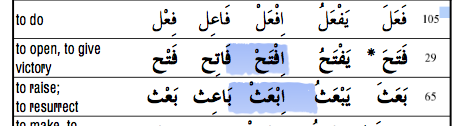
Go through the 80% quran pdf file and read all the verbs and check its command format.
example is show in figure below highlighted.
Let’s practice the command format.  Translate the below sentences and memorize these as they might be useful for our daily usage. Let’s ask the kid to do some daily actions.

Hints
Arabic commands
wake up
أيها الولد، إنهَض من النوم صباحا
worship
وأعبُد ربك
eat and drink
وكُلْ واشرب
wear
وإلبِس ثيابك
go
وإذهَب إلى المدرسة
sit
وأجلِس في الصف بالآدب
read and understand
إقرأ  وأفهِمه
return
ثم أرجِع أيها الأولاد إلى البيوت
remove
وأخلِع ثياب المدرسة
wash
وأغسِل وجوهكم وايديكم

Plural
worship
واعبدوا ربكم
drink
واشربوا الشاي
depart / leave
فاخرجوا إلى الميدان
play
والعبوا مع أصدقائكم
return
ثم ارجعوا قبل المغرب
write
واكتبوا فروض المدرسة
eat and drink
وكلوا واشربوا من رزق الله


There is conjugation table to learn for imperative verb too.  Memorize it like other tables.
The method of constructing the other conjugations is as follows.
  • Prefix the conjugations with لِـ. This لام may have a سكون in certain situations
  • This لـ will do to the verb what لم did to it

Remember chapter 23- Jussive mood we studied the table.  {Lam , lamma,  in, li, la}  We need to follow those rules of jussive mood when prefixing with “Li”.

Imperative Active


لِيَسْمَعُوْا (they should listen)
لِيَسْمَعَا (they should listen)
لِيَسْمَعْ (he should listen)
لِيَسْمَعْنَ(they should listen)
لِتَسْمَعَا (they should listen)
لِتَسْمَعْ (she should listen)
اِسْمَعُوْا (listen)
اِسْمَعَا (listen)
اِسْمَعْ(listen)
اِسْمَعْنَ (listen)
اِسْمَعَا (listen)
اِسْمَعِيْ (listen)

لِنَسْمَعْ(we should listen)
لأَِسْمَعْ(I should listen)


Imperative Passive


لِيُسْمَعُوْا (they should be heard)
لِيُسْمَعَا (they should be heard)
لِيُسْمَعْ(he should be heard)
لِيُسْمَعْنَ(they should be heard)
لِتُسْمَعَا (they should be heard)
لِتُسْمَعْ (she should be heard)
لِتُسْمَعُوْا (you should be heard)
لِتُسْمَعَا (you should be heard)
لِتُسْمَعْ (you should be heard)
لِتُسْمَعْنَ (you should be heard)
لِتُسْمَعَا (you should be heard)
لِتُسْمَعِيْ (you should be heard)

لِنُسْمَعْ(we should be heard)
لأُِسْمَعْ(I should be heard)


Exercise:
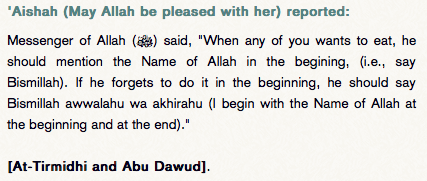
Read this beautiful hadith and find out the imperative verb used
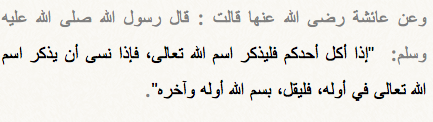
Its meaning …..

One of the ayah that makes my cry during the Eid’al adha (عيد الأضحى) is the incident of Ibrahim (عليه السلام ) in Surah Saffat : 101 where ibrahim (عليه السلام) says to his son

"O my son, indeed I have seen in a dream that I [must] sacrifice you, so see what you think."
and The reply given by his son was Amazing.

قَالَ يَا أَبَتِ افْعَلْ مَا تُؤْمَرُ ۖ سَتَجِدُنِي إِن شَاءَ اللَّهُ مِنَ الصَّابِرِينَ


Insha-allah we’ll look at the don’ts of the arabic in next chapter.

Monday, 6 April 2015

Arabic verbs practice


                                                                 بِسمِ اللهِ الرَّحمانِ الرَّحِيم

الحمد لله والصلاة والسلام على نبينا محمد وآله وصحبه

الدرس الثالث عشر

السلام عليكم ورَحْمَةُ اللَّهِ وبَركاتُه ,  insha-allah lets continue with some exercises on verbs.

Exercise :   Study and understand arabic grammar we studied in previous chapters.

خَلَقَهُ الله
مَن خَلَقَ العَالَمَ ؟
خَلَقَهُم الله
مَن خَلَقَ النّاسَ ؟
خَلَقَها الله
مَن خَلَقَ الجَنّةَ ؟  
يَخْلُقُها الله
مَن خَلَقَ الاَزْهَار ؟
خَلَقَها الله
مَن خَلَقَ السَّمَاءَ ؟
خَلَقَنىِ الله
مَن خَلَقَكَ ؟
يَرْزُقُنِى رَبّىِ
مَن يَرْزُقُكَ ؟
يَرْزُقُنِا رَبُّنا
مَن يَرْزُقُكم مِنْ الطيّباتِ  ؟
نعم نَعبُدُ إلهاً واحِداً
أَ تَعْبُدُونَ إلهاً واحِداً ؟
لا : ما خَلَقُوهُ
أَ خَلَقَ الناس شيء ؟
لا يخلُقونَ شيء
أَ يخلُقونَ شيء ؟
نعم اَعْرِفُهُ
أَ تَعرِفُ اِلهَكَ ؟
لا: ما خلُقناها
أَ يخلُقتم الارض ؟
بل الله خالِقُ كُُلِّ  شيءٍ
و هُوَ على كُُلِّ  شيءٍ   قديرٌ


There are lot of things to learn from this exercise.  And most of it we have already learned from previous chapters.   Just verify what all you have recalled.  

The verb ( خَلَقَ ) means to create. And its a beautiful verb which can be attributed only to Allah (swt).  Each sentence is trying to assert that everything is created by Allah (swt). And nothing got created by itself or we have created anything.  The first questions that is asked is “Who created the world”.  The answer is “خَلَقَهُ الله” .   Notice that ( خَلَقَهُ ) has verb + pronoun suffix from this chapter.  The present form of ( خَلَقَ ) means ( يَخْلُقُ ).
From now on whenever we learn any verb we should know its present tense and past tense both. (  خَلَقَ -   يَخْلُقُ )

Below are meanings of words that are underlined in the exercise.

  1. زهر  <= flower    الاَزْهَار=> flowers
  2. السَّمَاءَ => sky      الارض => earth  (اللَّهُ الَّذِي خَلَقَ السَّمَاوَاتِ وَالْأَرْضَ  - 7:54)
  3. Now the way to decode the word (يَرْزُقُكَ ) is that since its has the letter ( يَ ) in starting we can guess its present tense of the verb. And since it does not have ( انِ  or ون ) at the end its is 3rd person masculine singular.  It is ending with ( ك ) its a pronoun suffix. so we trim the verb form and suffix to get ( رزق ). Now check the meaning of this in dictionary you will find this.

  1. You should know the meaning of word ( تَعْبُدُونَ ) ? If not try to do the same exercise as above to find its meaning.   Try the same for ( تَعرِفُ ).
  1. The verb ( تَعرِفُ ) is from   ( عرَف  - يَعْرِفُ).  Ever wondered why its ( يَعْرِفُ ) rather than ( يَعْرُفُ ) like we pronounce for (يَخْلُقُ ).   Every verb belongs to a category of pronunciation based on its second radical in present form.

Example:
    (ن) سَجَدَ -  يَسْجُدُ  => to prostrate
(ف)  رَكَعَ -   يَرْكَعُ   => to bow down
(ن)  عَبَدَ يَعْبُدُ =>  to worship
Notice that in the above examples the vowels ( ـَ ـُ ـِ ) are different for different verbs, their second radical. Based on this the verbs are classified into 6 categories.  This is the reason why we should learn both present tense and past tense together. else we will make a spelling mistake.  Notice from the dictionary for the verb  ( رزق) in above example (U) is written after its word (razaqa). this means we have to use (  ـُ ) for second radical in its present form. i.e ( يَرْزُق)
The reason we have written (ن) or (ف) before the verbs is to help us remember the categories of verb classification. You can find these in some dictionaries too instead of (a, i , u)


ف
فَتَحَ  - يَفْتَحُ
to open
ـَ  a
ض
ضَرَبَ  - يَضْرِبُ
to beat
ـِ  i
ن
نَصَرَ -  يَنْصُرُ
to help
ـُ  u
س
سَمِعَ -  يَسْمَعُ
to listen
ـَ  a
ح
حَسِبَ -  يَحْسِبُ
to reckon
ـِ  i
ك
كَرُمَ -  يَكْرُمُ  
to be noble
ـُ   u


Some examples that fall into these categories.


ف
ذَهَبَ -  يَذْهَبُ
to go
ف
فَعَلَ -  يَفْعَلُ
to do
ف
قَرأ   - يَقْرَاُ
to read
ن
كَتَبَ -  يَكْتُبُ
to write
ن
شَكَرَ -  يَشْكُرُ
to thank
ن
دَخَلَ -  يَدْخُلُ
to enter
ض
جَلَسَ -  يَجْلِسُ
to sit
ض
رَجَعَ  - يَرجِعُ
to return
ض
غَفَرَ -   يَغْفِرُ
to forgive
س
لَعِبَ -  يَلْعَبُ
to play
س
عَلِمَ    -  يَعْلَمُ
to know
ك
قَرُبَ -  يَقْرُبُ
to come near


Exercise :
Try to make the table of all the verbs we have learnt above in past tense and present tense.
Future tense ?  Easy.
To form future tense in Arabic the prefix (سـ) "sa" is added to the present tense verb, or (سوف) "sawfa".
For example consider the sentence: I eat apples > "آكلُ تفاحاً" "Akulu tuffahan"
To express the future we have two ways: I will eat apples > "سـآكلُ تفاحاً" "Saakulu tuffahan" or: I will eat apples > "سوف آكلُ تفاحاً" "Sawfa akulu tuffahan".
Quran example:
كَلَّا سَوْفَ تَعْلَمُونَ  102:3  (No! You are going to know.)
ثُمَّ كَلَّا سَوْفَ تَعْلَمُونَ  102:4 (Then no! You are going to know. )

Alhamdulillah, By now we are have covered lot of the basic concepts of arabic.  I can say that we have covered half of the course. Insha-allah from next chapters we shall try to delve into intricate details of arabic and some advanced topics.

For you to be good at understanding quran, you must build your vocabulary.  Its all your hard work that will give you fruitful result in Arabic study insha-allah.   Next you have to do the following to build your vocabulary in quran.  
  1. Go back and iterate all the important points from all the chapters learned.
  2. Memorise all the verbs in 80 percent quran words book. Link here.
  3. Practice whatever verbs you have learned from this site. [http://www.80percentwords.com/].
  4. Practice quran examples from this site. [http://arabictest.herokuapp.com/test?txt=qlevel2].

Exercise :  Read and understand.

لُغَةُ القُرْآنِ
السَّلامُ عَلَيْكُمْ ورحمةُ اللَّهِ وبَركَاتُهُ
اَلْمُدَرِّسُ
وَعَليْكُمُ السَّلامُ ورحمةُ اللَّهِ وبَركَاتُهُ
صَلاحٌ
أَيْنَ تَدْرُسُ يا صَلاحُ؟
اَلْمُدَرِّسُ
أَدْرُسُ في شُعْبَةِ اللُّغَةِ العَرَبِيَّةِ
صَلاحٌ
لماذا تَدْرُسُ اللُّغَةَ العَرَبِيَّةَ؟
اَلْمُدَرِّسُ
أَدْرُسُ اللُّغَةَ العَرَبِيَّةَ لأَفْهَمَ لُغَةَ القُرْآنِ الكَريمِ وَالحَدِيثِ الشَّريفِ
صَلاحٌ
أَجَلْ، إِنَّ اللُّغَةَ اْلعَرَبِيَّةَ لُغَةُ اْلعُلومِ الإِسْلامِيَّةِ، وَهِيَ اليَوْمَ لُغَة عالَمِيَّة
اَلْمُدَرِّسُ
أَنا أُحِبُّ اللُّغَةَ العَرَبِيَّةَ
صَلاحٌ
وَفَّقَكَ اللَّهُ
اَلْمُدَرِّسُ


Exercise : Read and understand this beautiful hadith.

عَنْ أَنَسٍ رَضِي اللّه عَنْهُ عَنِ النَّبِيِّ صَلَّى الله عَلَيْهِ وَسَلَّمَ قال:   " يَتْبَعُ الميِّتَ ثَلاثَةٌ : أهْلُهُ ومَالُهُ وعَمَلُهُ. فَيَرْجِعُ اثْنَانِ، ويَبْقَى وَاحِدٌ : يَرْجِعُ أَهْلُهُ ومَالُهُ، ويَبْقَى عَمَلُهُ ". (متفق عليه).

Explanation of some words:
to follow
تَبِعَ  -  يَتْبَعُ
dead opposite of (الحَيِّ) living.
الميِّت
relatives. syn. (الأقَارِبُ)
الأهلُ
to stay. (i.e not return )
بَقِيَ  - يَبْقَى

Alhamdulillah, this is the end of part 1 of Arabic course. Insha-allah we shall start part-2 with what was left in part-1 and some advanced grammar in arabic to understand Quran.