Showing posts with label arabic definite. Show all posts

Friday, 9 October 2015

Arabic Don'ts - Prohibitive Verb

بِسمِ اللهِ الرَّحمانِ الرَّحِيم

الحمد لله والصلاة والسلام على نبينا محمد وآله وصحبه

الدرس الخامس و العشرون

السلام عليكم ورَحْمَةُ اللَّهِ وبَركاتُه ,  In the previous chapter we studied the command format. i.e asking someone to do something. Do this … Do that etc…

In this chapter insha-allah we will learn how to tell Don’t do this .. or Don’t do that. ….   Like in English we add Don’t in front of the verb. example Where the imperative would mean “listen”, the prohibitive means “don’t listen.”

The method of constructing this verb is quite simple;
  • First, convert the present tense to jussive and prefix لا to it.
Example:
إفْعَل: Do,
لا تَفْعَل: Don’t do.

Memorize this table for [Don’ts]


لا يَفْعَلُوْا  - They should not do
لا يَفْعَلا - They should not do
لا يَفْعَلْ  - he should not do
لا يَفْعَلْن -  They should not do
لا تَفْعَلا - They should not do
لا تَفْعَلْ - she should not do
لا تَفْعَلُوْا - Don't do
لا تَفْعَلا - Don't do
لا تَفْعَلْ -   Don't do
لا تَفْعَلْن - Don't do
لا تَفْعَلا - Don't do
لا تَفْعَلي - Don't do

لا نَفْعَلْ - We should not do
لا أَفْعَلْ  - I should not  do

Remember (Jussive) form is important. Sukkun on last letter, else it will change the meaning:
لا تشربْ - Don’t drink
and لا تشربُ - you don’t drink.


Exercise :  
Translate below hadith and quran ayah which uses the prohibitive verbs.

عَنْ جَابِرٍ رَضِيَ اللّه عَنْهُ قَالَ: قال رَسُولُ اللّه صَلَّى اللّه عَلَيْهِ وَسَلَّمَ:
" لا تَأْكُلُوا بالشِّمَال فَإنَّ الشَّيْطَانَ يَأْكُلُ باْلشِّمَال ".
 رواه مسلم

عَنْ ابْنِ عُمَرَ رضي اللّه عَنْهُمَا قال: قال رسولُ اللّه صلى الله عليه وسلم
" لا تَمْنَعوا نِسَاءَكُمُ المساجِدَ، وبُيُوتُهُنَّ خَيْرٌ لَهُنَّ ".
(رواه أبو داود).


يَا بُنَيَّ لَا تُشْرِكْ بِاللَّهِ ۖ إِنَّ الشِّرْكَ لَظُلْمٌ عَظِيمٌ  - 31:13


فَاذْكُرُونِي أَذْكُرْكُمْ وَاشْكُرُوا لِي وَلَا تَكْفُرُونِ - 2:152


Previous chapter we asked a kid to Do something.  But now we will ask kid NOT to do somethings.


Don’t
Arabic
go
أيها الولدُ لا تَذْهَبْ إلى المَدْرَسَة بالتاخير
laugh
ولا تَضْحَكْ على أحدا
Joke always
ولا تَمْزَح دائما
be sad
ولا تَحْزَن
be lazy
ولا تَكْسَل
lie
لا تَكْذَبوا فإن الكِذْب خَصْلَة مزمومة
play , read
ولا تَقْرَوا وَقْت اللَعِب ولا تَلْعَبوا وَقْت القِراءة
make
ولا تَجْعلوا مَعَ الله إله آخر
prostrate
لا تَسْجُدُوا لِلشَمْسِ ولا لِلقَمَرِ


فإنَّ means because in arabic and it associates well with the probitive verbs.  here are the examples.  please try to get its meaning from dictionary.


لا تَشْرَبْ هذا الشَّايَ فَإنَّهُ بَارِدٌ  
Don’t drink this tea because it is cold.
لا تَأْكُلْ هذا الطَّعَامَ فَإنَّهُ فَاسدٌ
اقْرَأْ هذا الكِتَابَ فإِنَّه مُفِيدٌ
لا تَنَامُوا الآنَ فَإِنَّ وَقْتَ الصَّلاةِ قَرِيبٌ
كُلْ هذه الفَاكِهَةَ فَإِنَّها لَذِيذَةٌ .


Alhamdulillah we have completed vast part of Arabic learning. Insha-allah we have 2-3 chapters left to learn more about verb forms ,Please bare patience.

I suggest you to go through this link which nicely summarises about the arabic verbs.
Also suggest to go through the verb list in 80% quran and practice test from this link
Learn some more verbs from this link.
please memorise the verb list above.  And remember practice is the key to master anything.

Friday, 5 June 2015

Arabic Idafa - possessive format


                                                                بِسمِ اللهِ الرَّحمانِ الرَّحِيم

الحمد لله والصلاة والسلام على نبينا محمد وآله وصحبه

الدرس السادس عشر

لا إله إلا الله محمد  رَسُولُ اللّهِ

السلام عليكم ورَحْمَةُ اللَّهِ وبَركاتُه ,  I am sure you should know the meaning of above. And every muslim must say  “اشْهَدُ اَنْ  لا إله إلا الله محمد  رَسُولُ اللّهِ” .  meaning i bear witness that, there is no God but Allah (swt) and Muhammad ﷺ is messenger of Allah.  Are you able to spot the verb that sentence ? “شهد” .   Is that in present tense / past tense ? What’s the past tense equivalent of that ?

Who is Muhammad ﷺ  ?
        رَسُولُ اللّهِ
If you notice there are 2 nouns in this. [ رَسُولٌ -  messenger ] & [ اللّهُ - Allah ].  But joining them makes it idafa format as in english "The... of the....." possessive format also called (owner - owned).

The format of idafa is always [إسْمُ  إسْمِ]   or [إسْمُ  إسْمٍ].
example:
رَسُولُ اللّهِ     -  Messenger of Allah
بابُ الْبيتِ     - the door of the house
كتابُ ابنِهِ      - the book of his son
كتابُ محمّدٍ  - the book of Muhammad

The mudaf - (owner) takes neither the definite nor the indefinite.  These 2 are wrong .
كِتابٌ بِلالٍ
الكِتابُ بلالٍ


Asking questions   “whose is it / whose is he/she ?”

example 1:  whose book is this ?  لِمن هذا الكِتابُ ؟
Bilal’s book / (book of bilal)   :  كِتابُ بلِالٍ

example 2:  whose son is he ?  إبْنُ مَنْ هُو؟
He is umar’s son. هو إبْنُ عمرِ

Exercise :   

Remember the family tree exercise we did in chapter 2.
Ahmed : father                 fatima : mother
umar     : son                   hajira    :  daughter
You know the relationship of each one to each other. complete the following as given in example.

Q. Whose one is he ?  إبْنُ مَنْ هُو؟
A. Umar, he is Ahmed’s son.  عُمر،هو إبن أحمدِ
Q. Whose daughter is she ? ………………..
A. ……………………… , حاجرة
Q. زوجٌ  مَن هو؟
A. Ahmed ………….
Q. whose sister is she ?
A. ……………………… , حاجرة
Q. whose wife is she ?
A.……………………… فاطمة
Q. And umar ?
A. Umar, he is Hajira’s brother


Exercise : Please try to translate these examples from quran for Idafa:
  1. فِي سَبِيلِ اللَّهِ
  2. بَنَاتُ الْأَخِ وَبَنَاتُ الْأُخْتِ
  3. أَرْضُ اللَّهِ وَاسِعَةً
  4. فَأُولَٰئِكَ أَصْحَابُ النَّارِ
  5. آيَاتُ الرَّحْمَٰنِ

Wednesday, 27 May 2015

Arabic adjectives and Creating negative “to be” sentences


                                                                بِسمِ اللهِ الرَّحمانِ الرَّحِيم

الحمد لله والصلاة والسلام على نبينا محمد وآله وصحبه

الدرس الخامس عشر

السلام عليكم ورَحْمَةُ اللَّهِ وبَركاتُه , Can you tell the chapter number from above title which you have learned from previous chapter ?  

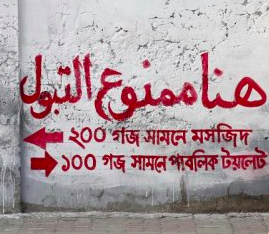
Interesting incident from Bangladesh:
Public urination is a problem in Bangladesh due largely to a lack of public toilets. Municipal officials in the capital Dhaka have battled in vain to stop men urinating in public, with signs in the local Bengali language and warnings of punishment and fines yielding no notable results.


Now the government is hoping that an innovative idea can put a stop to the habit. Recently the Ministry of Religious Affairs released their campaign “Language Matters” wherein Bengali signs warning against urination are now being replaced by Arabic signs, a holy language for Bangladeshis.
Perhaps they have taken a cue from neighboring India — battling with the same problem — where pictures of Hindu gods and goddesses on the walls are intended to have the same effect.

Very good lesson for people who don’t learn arabic. Arabic has just become holy arts to be put on walls of our home.

In this chapter insha-allah we will learn about the arabic adjectives. As you know the adjectives are words that describe or modify another person or thing in the sentence.  Please memorize these basic adjectives and their opposites.


Arabic adjective
English meaning
Opposite adjective
English meaning
غَنِيٌ
rich
فَقِيرٌ
poor
طَوِيلٌ
tall
قَصِيرٌ
short
بَرْدٌ
cold
حارٌ
hot
جَدِيدٌ
new
قَدِيمٌ
old
نَظِيفٌ
clean
وَسِخٌ
dirty
صَغِيرٌ
small
كَبِيرٌ
big
خَفِيفٌ
light weight
ثَقِيلٌ
heavy
صَالِحٌ
good
رَدِيء
bad
جَمِيلٌ
beautiful
قَبِيحٌ
ugly
ذَكِيٌ
intelligent
غَبِيٌ
stupid
نَشِطٌ
active
كَسْلانٌ
lazy

Look at this simple sentence.

The man is righteous
الرَجُلُ صَالِحٌ

Can you guess the meaning of  رَجُلٌ صَالِحٌ.    Same as above ?   No ..!!
If you notice above phrase the “man” is not definite. (i.e not الرَجُلُ  but  رَجُلٌ).  this changes the sentence into an adjective phrase.  “the righteous man”.

Note:  learn definite and indefinite from chapter -3.

The adjective phrase will have either both definite (noun + adjective) or both indefinite.
i.e.  رَجُلٌ صَالِحٌ   or الرَجُلُ الصَالِحُ .
Now this would be wrong :  رَجُلٌ الصَالِحُ  but الرَجُلُ صَالِحٌ is correct and it’s a simple sentence.
Important rule to remember on adjectives is that
Adjectives phrases always agrees with its noun ( subject ).

i.e if noun is definite, then adjective is also definite.  (رَجُلٌ صَالِحٌ)
if noun is indefinite then adjective is also indefinite.  (الرَجُلُ الصَالِحُ)
Similarly for dual, plural, or feminine. lets see all types in below table.
(مُعَلِّمٌ) means teacher. and (جَيِّدٌ) means good.

both indefinite
مُعَلِّمٌ جَيِّدٌ
A good male teacher
both definite
الْمُعَلِّمُ الْجَيِّدُ
The good male teacher
feminine, indefinite
مُعَلِّمَةٌ جَيِّدَةٌ
A good female teacher
feminine,
definite
الْمُعَلِّمَةُ الْجَيِّدَةُ
The good female teacher
dual,indefinite
مُعَلِّمَاْنِ جَيِّدَاْن
Two good male teachers
dual,definite
الْمُعَلِّمَاْنِ الْجَيِّدَاْن
The two good male teachers
dual,feminine,
indefinite
مُعَلِّمَتَاْنِ جَيِّدَتَاْن
Two good female teachers
dual,feminine,definite
الْمُعَلِّمَتَاْنِ الْجَيِّدَتَاْنَ
The two good female teachers
plural,
indefinite
مُعَلِّمُوْنَ جَيِّدُوْنَ
good male teachers > 2
plural definite
الْمُعَلِّمُوْنَ الْجَيِّدُوْنَ
The good male teachers
plural,
indefinite,
feminine
مُعَلِّمَاْتٌ جَيِّدَاْتٌ
good female teachers
plural,definite,
feminie
الْمُعَلِّمَاْتُ الْجَيِّدَاْتُ
The good female teachers
  

If we are talking about adjectives. then how can we forget about the ninety nine “Asma-e-Hasana” (Attributive or Adjective or beautiful) names of Allah mentioned in the Quran. To mention a few .

الرحمن
The All-Compassionate
الرحيم
The All-Merciful
الملك
The Absolute Ruler
القدوس
The Pure One
السلام
The Source of Peace
Notice that Allah’s attribute must be all definite.
Its very important to learn all the 99 names of Allah (swt).  It helps a lot when invoking your prayer. You call him by his beautiful names to get your prayers responded. The way you can memorise it is by listening to any audio on 99 names of Allah (swt), like 99 names of Allah by hashim abbas. example here:
Here is a beautiful hadith.  Read it. understand it. and spot adjectives in it.

“The Prophet ﷺ (peace be upon him) has told us:
كَلِمَتانِ خَفِيفَتانِ على اللِسَانِ ، ثَقِيلَتَانِ في المِيزان، حَبِيبتانِ إلى الرَحمن: سُبْحَان الله وبِحَمْدِه، سُبْحَان الله العَظِيم
“Two words are light on the tongue, heavy in the balance, beloved to the Merciful: ‘Glory be to Allah and by His praise. Glory be to Allah, the Immense.’” (Bukhari)


Creating negative “to be” sentences
Although Arabic doesn’t have a “to be” regular verb to create “I am” or “you are” phrases, it does have a verb you use to say “I am not” or “you are not.” This special irregular verb laysa (lay-sah) creates negative “to be” sentences.
example:  أنا لَسْتُ طَالِب .  I am not a student.

When we conjugate the verb ليس, we add the same suffixes to it that we use when we conjugate any verb in the past tense. Of course, we will only have present tense meaning with ليس. Below is a chart with the conjugations for ليس.

plural
dual
singular

 They are not   لَيْسوا
They are not لَيْسا
 He is not لَيْسَ      
3rd masc.
  They are not   لَسْنَ
 They are not  لَيْسا
 she is not  لَيْسَت
3rd fam.
 You are not  لَسْتُم
  You are not  لَسْتُما
 You are not  لَسْتَ
2nd masc.
 You  are not  لَسْتُنَّ
  You  are not  لَسْتُما
 You  are not  لَسْتِ
2nd fem
 We  are not  لَسْنا

  I  am not  لَسْتُ
1st


More example:
The director is not in this office   لَيْسَ المديرُ في المكتبِ    
You are not sick.  ( أنْت لَستَ مَرِيض )
We are not in the school. نَحْنُ لَسْنا في المَدَرسَة
The tall girl is not weak.  البنت طَويلَة ليسَتْ ضَعِيفَة


If we want to stress on the adjective, then we use “جِدًا”.   i.e الرَجُلُ صَالِحٌ جِدًا
then man is very righteous.
Translating :  “The girl is very beautiful, she is not ugly”  will be.
البِنْت جَمِيلَة جدًا، هي ليست بِقَبِيحَة

Practice … Practice ….. Practice ….

If you just take a noun and an adjective. you can make many phrases like below.
House: البَيتُ   new : جَدِيدٌ

The house is new
البَيتُ جَدِيدٌ
A new house
بَيتٌ جَدِيدٌ
The new house
البَيتُ الجَدِيدُ
2 new house
بَيتان جَدِيدان
new houses
بُيوتٌ جَدِيدة
The house is very big
هذا البَيتُ جَدِيدٌ جِدًا
And it’s not old
و ليس بقَدِيمٌ

Similarly make same sentences for
Boy : ولد    Small : صغير
Food : طعام cold : برد
Bag : حقيبة  heavy : ثقيل
car : سيارة   fast: سرعة    slow:  بطيء
bird : طائر  black : أسود   white :  أبيض
student : طالب  lazy: كَسْلانٌ
Room -> clean / dirty
minaret  منارة  -> tall / short
Boy : strong / weak